
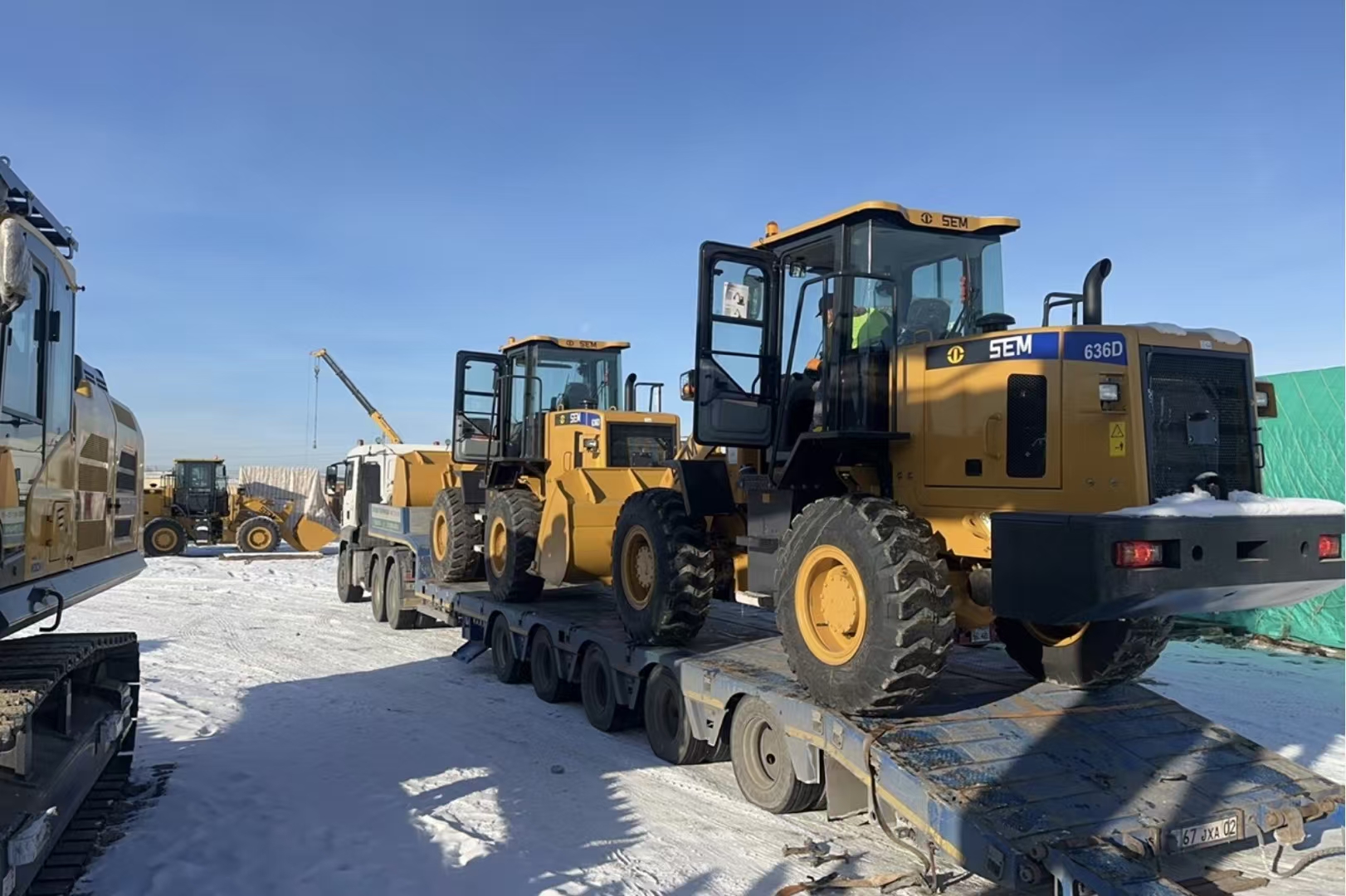
Iran Truck Freight: FTL, LTL and the Cost of Certainty
The Canton Fair signal: fewer buyers, sharper questions
The autumn Canton Fair produced a result that reads like bad news and is not. Buyers from the Middle East came in smaller numbers — routes and the regional situation took their toll — but the ones who came arrived carrying something different: a list.
Exhibitors described the same shift independently. Earlier editions brought browsers who would walk a hall for half a day comparing unit prices. This edition brought buyers heading straight for the category they had come for, opening with questions that were not about price at all: can you hold this delivery date, is the lane stable, and what happens if it slips.
One Jordanian buyer put it plainly, as reported from the floor: anyone who has gone through what it takes to reach Canton this year is not there to window-shop. They are not afraid of paying a few points more. They are afraid of paying and then waiting.
That is the useful part. In the Middle East, logistics uncertainty has become a cost line — and on the Iran corridor it is the line most often missing from the quotation.
The question changed before the price did
Three things moved at once.
Project cargo and small repeat orders both grew. Rebuilding and new-city programmes pull in structural steel, building materials and construction equipment, and those orders are tied to a construction schedule — a late delivery is a contractual breach, so the loss climbs well past the value of the goods. At the same time, consumer categories shifted toward smaller, more frequent replenishment as local retail and e-commerce shortened inventory cycles.
Buyers started costing the whole chain. Freight movement, border and port dwell, clearance delay — all of it now goes into landed cost, instead of comparing ex-works prices line by line. For Iran- and Iraq-bound cargo this is not theoretical. If the rate doubles and transit stretches by a fortnight, the landed number moves even when the unit price never did. Clearance trouble at the far end can wipe out the margin on the whole consignment.
They stopped shopping and started contracting. Fewer suppliers, longer agreements — partly because switching suppliers in a volatile corridor imports new risk, and partly because localisation requirements, from Arabic-language adaptation to efficiency certification, take time to work out. Loyalty is now earned by repeatable delivery, not by the lowest quote in a given week.
All three point the same way: certainty has become the product. And on a road corridor, the first place certainty is won or lost is a decision most shippers still make on volume alone.
FTL and LTL differ by responsibility, not by volume
On road transport to Iran, two structures are on offer, and the difference between them is usually described as a matter of volume. It is not. It is a matter of who carries which risk.
Full truck load (FTL): the whole vehicle carries one shipper’s cargo. Nothing is consolidated with anyone else’s goods, and the transit guarantee corresponds to that one consignment.
Less-than-truck-load (LTL): a domestic consolidation warehouse collects cargo from several shippers, loads it onto one vehicle, and that truck departs with multiple consignors and, usually, multiple consignees in Iran.
The instinct is that LTL is the cheaper answer to a smaller shipment. That is often true on rate and frequently wrong on outcome, because the two structures allocate one specific risk very differently.
Test one: cargo value — who absorbs the joint inspection
With FTL, an inspection concerns your documents. With LTL, the truck is a single customs unit: if another shipper’s paperwork has a problem, the vehicle can be held at the border and every consignment on it waits for the same review.
That asymmetry is why we treat export documentation as part of the routing decision rather than as paperwork that follows it. Get it right and the choice between the two structures is commercial. Get it wrong and the structure stops mattering, because nothing moves.
That exposure is inherent to consolidation — it is not a defect in a particular operator. It is worth stating plainly because it is almost never priced. A load of low-value general merchandise can absorb a week. A crate of precision components cannot, and the saving on freight does not come close to covering the delay.
Where we would draw the line: high-value machinery and precision parts, fragile goods, and non-hazardous chemical cargo go FTL. Low-value consumer goods, samples and small parcels can go LTL — provided the buyer has accepted the delay exposure knowingly, not by assumption.
Test two: timing — the consolidation wait is invisible
FTL loads and departs. LTL waits for the truck to fill.
Industry reporting puts that consolidation wait at roughly 3–7 days, varying by border and by week. Treat that as a historical reference rather than a transit commitment. The number matters less than the mechanism: the wait happens before the vehicle ever reaches a border, so it never appears in a transit time quoted from the departure point.
Which means the honest elapsed time for LTL is cross-border transit plus the consolidation window plus whatever the border adds. Quote only the first figure and the buyer will measure the gap for you.
Test three: fragility — shared loading, shared risk
On an FTL load, the shipper can specify bracing and palletisation, and cross-border movement generally does not require re-handling the cargo.
On LTL, the warehouse stacks several shippers’ goods together. Heavy cargo ends up on light cargo because the load plan is optimised for the truck, not for your carton. At some transit points the load may be re-arranged for gauge or vehicle reasons. Each of those steps is a chance for a scuff, a crush or a crack that no one will own.
Fragile goods, glass and anything that cannot take a stack belong on a dedicated vehicle — even at a low fill rate. That is the case where LTL looks cheapest on paper and is most expensive in practice.
The border you book matters too
Consolidation capacity is not uniform across crossings. Sarakhs carries the deeper pool of full-truck capacity; Lotfabad is the more active consolidation point. Confirm which crossing a quotation actually uses before you compare two of them, because a rate built on one border is not comparable with a rate built on the other — same as any other corridor where two gates look interchangeable from a spreadsheet and are not.
One more routing question worth asking at the same time: whether the programme can split. If you are moving enough volume for a dedicated vehicle, part of it may sit better on China to Iran by rail at a fixed schedule, with road carrying the urgent balance. The two are complements more often than substitutes.
How we would decide it
Four questions, in order, before anyone quotes a rate.
What is the cargo worth per tonne, and what does a week of delay cost? If the delay cost exceeds the freight difference, the decision is already made.
Is the buyer’s date a promise or a preference? Project cargo and production input dates are promises. Retail replenishment is a preference. Price the two differently.
Can the goods survive shared loading? If not, FTL regardless of fill rate.
Which border, and is that capacity available this month? Capacity moves with the season and with what else is queuing.
And one structural point from the Canton Fair worth taking seriously: buyers are now asking for delivered cost and delivered date in the same sentence. A supplier who quotes ex-works and leaves the corridor to chance is answering a question the buyer has stopped asking.
Let’s Talk About Your Iran Shipment
If you are shipping to Iran and weighing FTL against LTL, send us the commodity, the value, the destination city and the date the buyer actually needs. We will price both structures and tell you where the delay exposure sits in each — including the part that never appears on the rate sheet.
No commitment required. Just a conversation.
Email: [email protected]
WhatsApp: https://wa.me/message/QPR7JMHO3NFZE1
Based in: Xi’an International Trade & Logistics Park
Archer Sourcing helps European, Central Asian, and Middle Eastern businesses move cargo from China via the China-Europe Railway Express and overland corridors. We operate from Xi’an — the departure hub of the Chang’an rail service.
Transit and consolidation figures in this article are historical references drawn from published industry reporting. They are not a rate, a quotation or a service commitment. Border capacity, inspection practice and schedules change; confirm the position at the time of booking.