
China to Romania by Rail: The EU Gateway Most Shippers Skip
The terminal everyone books, and the one they should
Ask a room of forwarders where China–Europe rail cargo lands and the same names come back: Małaszewicze, Duisburg, Hamburg. Queues at those terminals have become a fact of the corridor, and the cost of waiting — storage, rehandling, the truck running south — gets absorbed somewhere in the quotation without anyone naming it.
A question rarely gets asked out loud: who is actually buying the goods?
If the buyer sits in Romania, Serbia or Bulgaria, then landing the container in Poland and dragging it a thousand kilometres south is a step that exists out of habit rather than necessity. Romania removes it.
Why Romania counts as a gateway
Romania joined the European Union in 2007. It is a member state, not a candidate — and that single fact decides everything downstream.
Once goods are cleared and released in Romania, they enter free circulation within the EU and can be distributed onward to Hungary, Bulgaria and Serbia without a second customs entry. The country is a destination and a springboard at the same time.
The industrial base is the part most importers underestimate. Automotive components, machinery, electronics assembly, textiles, furniture, food processing and building materials lead the list, with a long roster of European carmakers and electronics manufacturers running plants in the country. That base buys mechanical and electrical components, hardware, plastic raw materials and automation parts — the categories China supplies best.
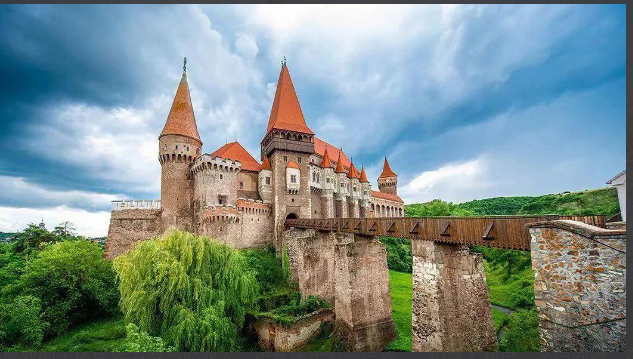
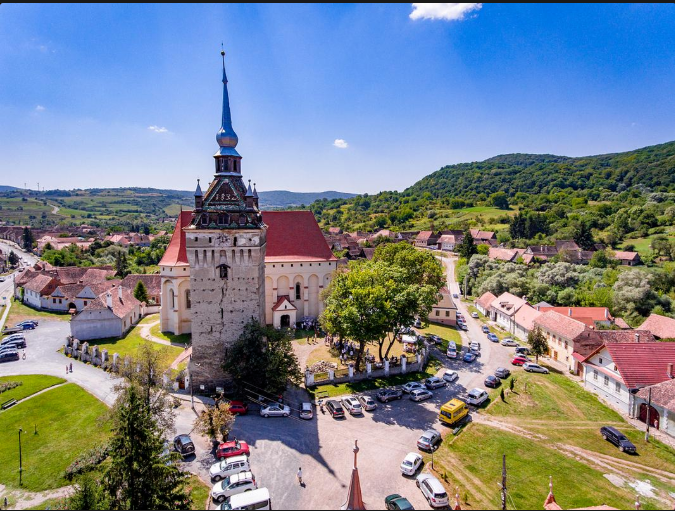
Bucharest is the commercial centre. Sibiu, Cluj-Napoca and Timișoara are the industrial cities, and the ones a surprising number of overseas suppliers cannot place on a map despite cargo moving through them every week.
One practical note before anything else: the currency is the leu. Romania is not in the eurozone. Domestic transactions run in RON; foreign trade settles in euro or dollars. Settle which one before you quote, not after.
Xi’an is where this starts
Xi’an is one of the principal departure points on the China-Europe Railway Express, and the Chang’an service has made it a regular westbound origin rather than an occasional one. Romania sits on the receiving end of that corridor.
For a Romanian buyer this matters for a mundane reason: a supplier in Zhejiang and a supplier in Shaanxi both have to reach a rail terminal, and Xi’an is not a detour for most of the industrial belt. Cargo can be consolidated, checked and loaded there before it starts moving west.
Which raises the part buyers usually discover late. Four suppliers in four provinces, each shipping separately, is four bookings, four sets of documents and four chances for a consignee name to be spelled three different ways. Consolidation is not a discount. It is an error-reduction measure that happens to also save money.
Two corridors into Romania
Two routes reach Romania, and they are not variations on one theme.
The northern route. From a Chinese border crossing through Kazakhstan, Russia and Belarus into Poland, then a gauge change and south to the Bucharest and Constanța terminals. Published corridor timings sit at roughly 25–32 days with relatively stable departures. It is the mainstream choice, and the faster of the two.
Its weakness is not the transport. It is policy. The Russia–Belarus segment carries corridor-policy and inspection exposure, and that exposure is where the peak-season capacity squeeze originates.
The two-seas route. Khorgos to Aktau in Kazakhstan, a Caspian ferry to Baku, rail to Poti in Georgia, a Black Sea ferry into Constanța, then rail or road onward to Bucharest and the rest of the EU. Published timings run roughly 31–34 days.
It avoids the northern corridor entirely, which is the entire point. What it costs is two ferry legs: sailing frequency and port congestion pass straight through into your delivery date, and the variance is visibly wider than on the north.
So the decision is not which route is better. It is which risk fits this cargo. Policy-sensitive and able to absorb float: the two seas. Time-sensitive and needing schedule stability: the north.
What actually decides it is what happens if the date slips. A shipment feeding a production line cannot absorb two extra weeks of waiting at a port. A replenishment order for a warehouse can, and will pay for the certainty instead. Ask that question before comparing the two timings, because the timings on their own do not answer it.
Where Romanian buyers get it wrong
Documents. Romanian inspection has a random element and documentary review is strict. Invoice, packing list and certificate of origin have to agree, and the HS code should be right the first time. Amending a declaration from China is far cheaper than amending it at the border.
Inland reach. Infrastructure quality varies sharply by region. Secondary cities run thinner logistics support, so distribution beyond the main hubs carries its own cost and lead time. Do not price a provincial delivery on a Bucharest assumption.
The clearance premise. “Cleared in Romania, free anywhere in the EU” is a correct statement — but only when clearance actually completes in Romania and the importer’s tax registration is in order. Without that, the free-circulation step does not exist.
Supplier readiness. A factory that has never shipped to the EU usually gets the product right and the paperwork wrong. That gap surfaces at the terminal, not at the factory gate, and by then the only fix is time.
What we do for Romanian buyers
Three services, and they are usually bought together.
Advice before you commit. Which corridor fits your commodity and delivery window, which Incoterm puts the risk where you want it, and what Romanian customs will actually ask for. We would rather answer those questions before you book than after your container is standing.
Freight from Xi’an. Booking and consolidation on the China-Europe Railway Express, FCL and LCL, export documentation, and delivery to the terminal or to the door.
Sourcing and local service in China. Finding suppliers, running a factory audit before the order, handling supplier coordination and samples, checking goods before they are loaded, and consolidating several suppliers into one shipment at our warehouse in Xi’an. Most Romanian buyers we work with start with one supplier and end up with five. The local service is what keeps five suppliers looking like one order instead of five problems.
Let’s Talk About Your Romania Shipment
If you are importing into Romania, or using it as a base for the Balkans, send us the commodity, the destination city and the delivery window. We will tell you which corridor we would put it on, where the exposure sits, and whether the suppliers you are talking to are actually ready for an EU shipment.
No commitment required. Just a conversation.
Email: [email protected]
WhatsApp: https://wa.me/message/QPR7JMHO3NFZE1
Based in: Xi’an International Trade & Logistics Park
Archer Sourcing helps European, Central Asian, and Middle Eastern businesses move cargo from China via the China-Europe Railway Express and overland corridors. We operate from Xi’an — the departure hub of the Chang’an rail service.
Corridor timings quoted here are published industry figures, given to show the relationship between the two routes. They are not a rate, a quotation or a service commitment. Actual schedules and prices apply at the time of booking.