
Why Your China Freight Quote Arrives as One Number
An all-in rate is not a price. It is a decision someone made for you.
Two forwarders quote the same container from the same factory to the same European terminal. The numbers come back different. One is cheaper.
You have no way of knowing which, because an all-in figure is a compression of at least four services whose costs move on completely different cycles — and the compression was carried out by someone whose interests are not identical to yours.
That is not a scandal. It is what happens when a quote is assembled for convenience rather than for comparison. But it has a cost, and the cost lands on the buyer at the exact moment of comparison, which is the only moment the number actually matters.
What is actually inside the number
Four services, normally sold as one.
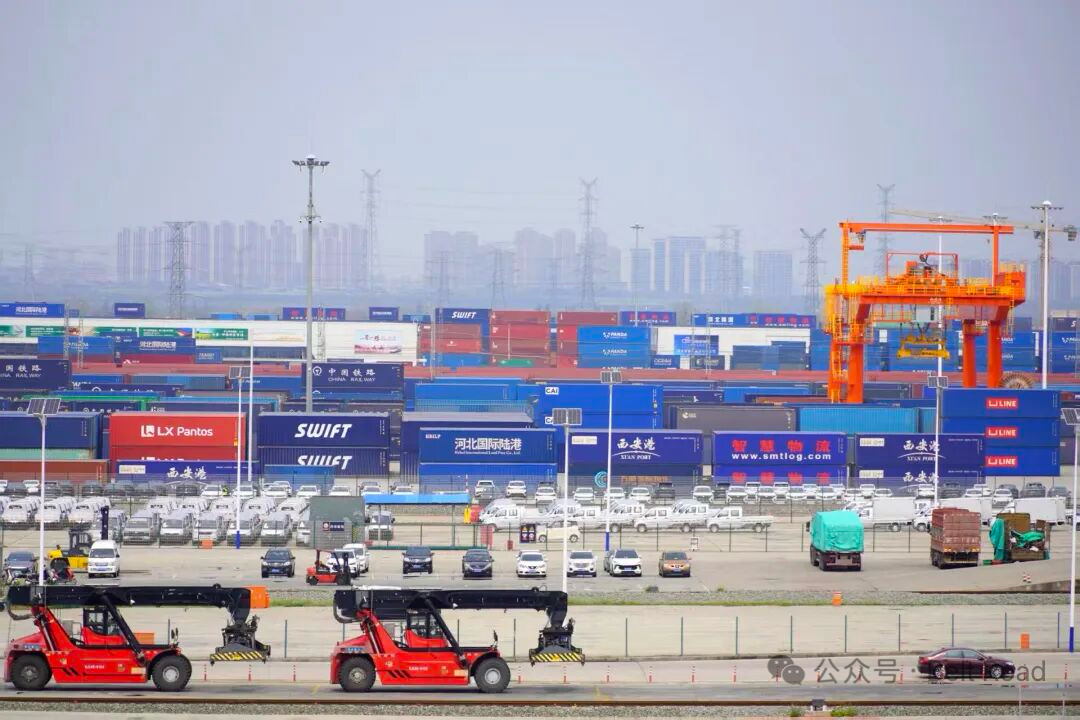
Terminal handling at origin. Loading and discharge at the port or rail terminal, storage, and terminal operations. Charged per container, and it moves with congestion and with whatever the terminal decides to charge this quarter.
Export clearance. Declaration and brokerage. Priced per shipment, and it moves with how complicated your commodity is — not with your freight.
Inland transport to the terminal. The leg from the factory gate to the named port or railhead.
The international carriage itself. The only component most buyers believe they are buying.
Why the four lines get flattened
The four do not merely carry different costs. In China they sit under different tax treatments, which is the mechanical reason they tend to arrive combined.
International freight forwarding is VAT-exempt. Terminal handling is a domestic taxable service at 6%. Customs brokerage is taxable at 6%. Domestic trucking is a transport service at 9%. Three categories, three sets of rules, dating from the 2016 VAT reform.
Where the paperwork for one component does not flow cleanly back to the party assembling the invoice, folding it into the exempt line is the path of least resistance. That is a description of an incentive, not an accusation. And the practical consequence for you is simpler than the mechanism behind it: a bundled quote is rarely evidence that anything is wrong. It is evidence that nobody asked.
For an inland supplier, that third line is not a rounding error
Not every container starts at a port. A factory in Shaanxi, Henan or Sichuan has to reach a terminal before it can go anywhere, and that first leg is a domestic move with its own rate structure, its own equipment question, and a genuine choice between road transport and a rail leg to the coast.
Compress that into an all-in number and you lose the ability to tell whether you are paying for a short transfer or a multi-day journey — and whether the quote assumed road or rail. That assumption alone can account for the gap between the two quotes you are trying to compare.
For a shipper moving volume, multimodal transport planning at this stage is where the money sits. Not in the ocean leg that everyone negotiates over.
The four lines to ask for
Ask for the quote split four ways, each on a named basis.
- Origin terminal handling — per container, with the terminal named
- Export clearance and documentation — per shipment
- Inland transport, factory to terminal — origin and terminal named, mode stated
- International carriage — destination terminal named
And one question that costs nothing to ask: which terminal, exactly? A rate quoted to “China” is not a rate to anywhere. Port, railhead and border crossing each carry a different cost and a different queue, and a comparison built across two of them is not a comparison.
How to compare two quotes without a spreadsheet accident
Once the four lines are in front of you, the comparison only works if five things are held equal.
The same named terminal at both ends. Not “China” to “Europe.”
The same equipment and quantity. A rate per container means nothing without the container size and the number of units.
The same terms. FOB, CIF and CNF are not variations on a theme. Where the terms are CIF or CNF, freight and insurance should be split out rather than folded into a total.
The same inclusions, particularly over who pays handling at destination — the single most common place for two apparently comparable quotes to diverge.
The same validity window, because origin charges move faster than freight does. A quote held for thirty days and a quote held for seven are not the same offer, even when the number on the page matches.
Most quote comparisons that go wrong are not arithmetic errors. They are comparisons between two documents that were never describing the same thing.
When the quote comes back as one number anyway
It happens. Two moves are worth trying before you accept it.
Ask for the breakdown as an amendment to the quote you were already given, not as a new quote. A revised version of the same offer is easy to agree to. A fresh request invites a fresh rate, and the fresh rate will not be the one you were comparing.
Price the one component that is big enough to matter separately. For inland cargo that is usually the factory-to-terminal leg. Trucking operators and terminal handling agents quote their own piece of the move directly, and a directly sourced price for a single leg is a clean check on the aggregate — you are not trying to replace the forwarder, only to find out how much of the number that leg accounts for.
Do not disaggregate everything. Four separate contracts for one container cost more in coordination than the transparency is worth, and a chain of responsibility split four ways becomes its own problem the first time something is damaged at a handover. The point of itemisation is a comparison you can trust, not a portfolio of suppliers.
Let’s talk about what your quote actually contains
Send us a recent China-origin quote and the destination you are buying for. We will tell you which lines are missing, which ones have been compressed, and where the two quotes in front of you are not actually comparable — before you commit to either.
No commitment required. Just a conversation.
Email: [email protected]
WhatsApp: https://wa.me/message/QPR7JMHO3NFZE1
Based in: Xi’an International Trade & Logistics Park
Archer Sourcing helps European, Central Asian, and Middle Eastern businesses move cargo from China via the China-Europe Railway Express and overland corridors. We operate from Xi’an — the departure hub of the Chang’an rail service.
Tax treatment described here is background on how China-origin quotes are assembled, not tax advice. Rates and categories change; confirm the position with the forwarder and, where it matters to your own accounting, with your own adviser.