
Whoever Holds the Paper Holds the Cargo
Every purchase from China comes down to a moment when one side has the goods and the other has the money, and neither wants to move first. The documents sit in between. There are about ten of them in a normal shipment, and almost none of them change when you change the payment term.
What changes is which one controls the cargo.
One question sorts every document
Ask of each document: if the cargo landed tomorrow, could this piece of paper stop someone from walking off with it?
By sea, yes. A bill of lading is a document of title, a receipt and evidence of the contract of carriage in one. Whoever holds the original can claim the goods, and without it the goods wait. That is why the difference between a straight bill and an order bill carries more weight than it appears to: a straight bill names the consignee, and naming the consignee is a way of handing over your leverage at the same time.
By air, no — and this is the most expensive misunderstanding in the whole file. An air waybill is not a document of title. The consignee collects against proof of identity, and the cargo is gone before anyone asks for paper.
That single distinction explains why payment terms on air freight are negotiated differently from sea freight, and why a supplier who offers open account on a sea shipment without blinking will refuse it on an air shipment. They are not being difficult. They are reading the same rule you are.
Advance payment: you are buying a supplier, not a document
Pay before shipment and the documents stop being security. They become confirmations of a decision you have already made about the supplier.
The one that earns its place is the proforma invoice, because it is what you pay against and what a bank will look at later if a letter of credit is opened. It should carry the goods description, quantity, unit price, total, the trade term, the payment terms and a validity date, stamped. A proforma invoice missing the trade term or the validity date is not a small formatting problem. It usually means the paperwork is being written by someone who has not yet worked out which side carries which risk.
Letter of credit: the bank reads paper
A letter of credit pays against documents. It does not inspect the cargo and it does not care whether the cargo is what you ordered. Documents conform, the bank pays. Documents do not conform, the bank does not.
This cuts in two directions and buyers usually notice only one. The familiar fear is paying for goods that turn out wrong. The practical failure is the reverse: the credit contains a term your side cannot satisfy, and payment stalls on a shipment that was otherwise handled properly.
So the work belongs before the credit is issued. Read each clause and ask whether the document it demands can actually be produced, on time, in the exact form specified. If it cannot, ask for an amendment while the credit is still in draft. Once it is open, the clause is the clause.
Collection: the draft is the instruction
In a collection the bank guarantees nothing. It moves documents and acts on a draft.
The two familiar shapes are release against payment and release against acceptance. In both, the bill of lading does the work, because documents change hands at the point the draft is honoured and the cargo stays out of reach until then. Remove the bill of lading from that arrangement — air freight again — and collection loses its lever entirely.
Open account: nothing holds the cargo
Sell on open account and the goods travel ahead of the money with no document standing between them.
For a supplier that is the weakest position in the table, which is why it normally arrives attached to something else: a deposit, a credit insurance policy, or a relationship old enough for the risk to have been priced in. When a Chinese supplier declines open account terms that a competitor from elsewhere accepted, this is usually the reason, and it is a reason about documents rather than about trust.
| Payment term | What controls the cargo | Where the risk sits |
|---|---|---|
| Advance payment | Nothing; documents are confirmations | With the buyer |
| Letter of credit | Documents, and only as the credit describes them | Shared, decided by the wording |
| Collection | The bill of lading, until the draft is honoured | With the seller until release |
| Open account | Nothing | With the seller |
Insurance follows the term, not the document
One document in the set is decided by the trade term rather than by the payment term, and it is worth separating out because the two get confused.
Under CIF and CIP the seller insures. The insurance policy is part of what you are owed, and it should match the invoice on currency and cover, with the insured amount normally set at 110% of the invoice value. Under FOB and EXW you are the one buying cover, which makes the shipping advice the document that matters: it is what tells you the vessel, the voyage and the bill of lading number early enough to insure a cargo you do not yet physically hold.
We check which of those two positions a buyer is actually in before quoting, because it changes both the document list and who pays for the gap when something goes wrong.
Four rules that survive any term
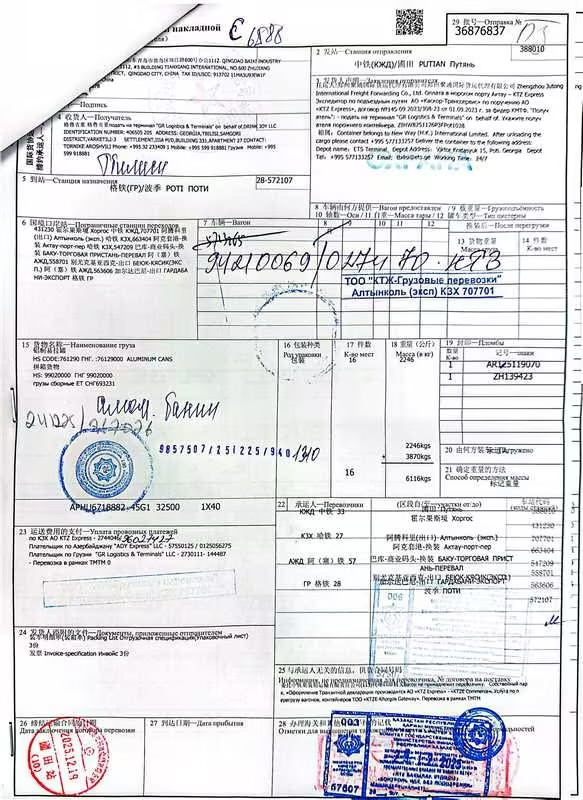
Documents must agree, to the letter. Any difference in a letter or a figure across invoice, packing list, bill of lading and certificate of origin can become a refusal to pay or a hold at the border. What matters is not the size of the difference but that one exists at all. Our notes on export documentation cover how that set is built, and the declaration behind it — the document your supplier files and you never read — is the subject of a separate piece.
A credit reads documents, not goods. Worth repeating, because it is the one that costs the most.
Scan everything and keep it. When a dispute begins, the documents are the evidence, and the file you did not keep is the argument you cannot win.
Electronic documents are arriving. More countries accept electronic certificates of origin and electronic bills of lading. It makes the flow faster and cheaper, and it shifts the question from who holds the paper to who holds the access.
Let’s talk before you settle the terms
Send us the payment term you have been offered and the document list that comes with it. We will tell you which document is actually holding your cargo in that arrangement, where the gap sits, and what is worth asking for before the deposit leaves your account.
No commitment required. Just a conversation.
Email: [email protected]
WhatsApp: https://wa.me/message/QPR7JMHO3NFZE1
Based in: Xi’an International Trade & Logistics Park
Archer Sourcing helps European, Central Asian, and Middle Eastern businesses move cargo from China via the China-Europe Railway Express and overland corridors. We operate from Xi’an — the departure hub of the Chang’an rail service.